Education & Mentorship
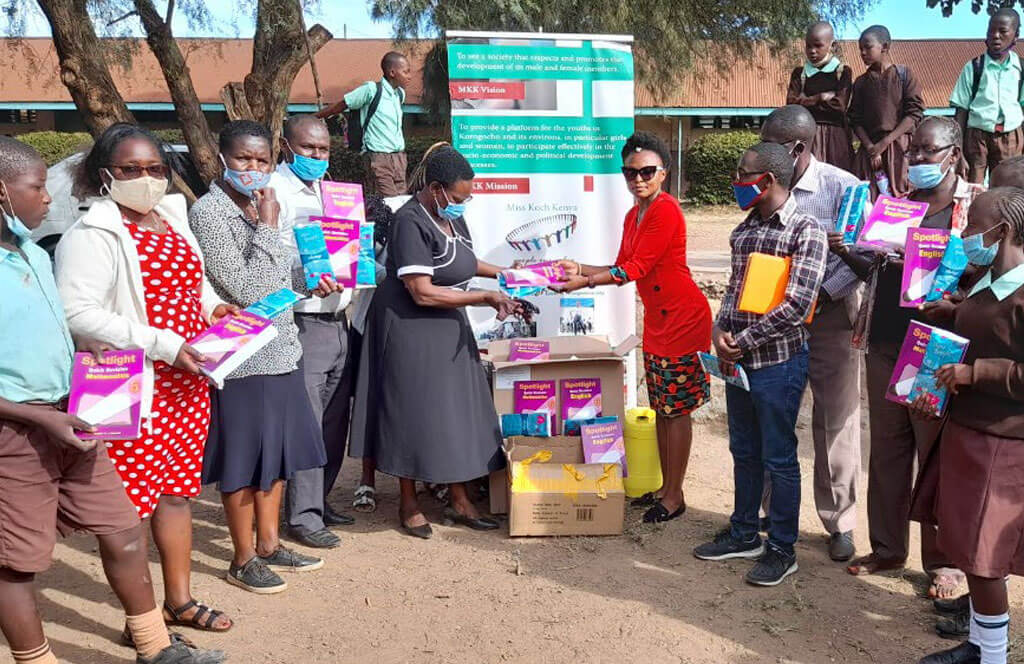
441 pupils have transitioned into secondary school through Miss Koch Kenya’s scholarship programme. That’s not a projection. It’s a count.
Scale
A LOT-Change
A 9-year, three-phase research partnership with APHRC (2013–2022): Phase I (2013–15) supported adolescent girls in grades 6–8 with homework help, mentoring, and parental counselling; Phase II (2016–18) scaled to include a leadership component and both boys and girls; Phase III followed the Phase II cohort into secondary school to test whether the model held at an older age. Result: 900+ youth reached, and published research showing mentoring measurably improves school transition and exam performance.
SILP (Strengthening Innovative Learning Practices)
A post-COVID scale-up of a home-study pilot, delivered with mentoring partner GRIC (Grassroot Nest for Innovations and Change), helping learners keep up with schoolwork and building a peer-learning platform.
18-year scholarship and mentoring programme, running since MKK’s NGO registration opened access to structured funding in 2010
300+ students funded to date
441 pupils transitioned to secondary school
University-level support has continued since 2010
80 teachers trained in interactive teaching techniques and e-learning, post-COVID
50+ children received physiotherapy support through a partnership with Team Pankaj (cerebral palsy support)
ECD Center: a secured, purpose-built space for 160 early-childhood learners, built with the HP Dawda Foundation on reclaimed riverbank land
Starting school isn’t the same as finishing it.
Across sub-Saharan Africa, only around 12% of secondary-school-age children complete a full secondary education. In Korogocho, that statistic isn’t abstract. It’s the reason our scholarship and mentoring programme exists.
We track transition, not just enrolment.
A scholarship only counts as a result when a student moves on to the next stage of school, not when the fees are paid.